


 Anaheim Ducks
 Arizona Coyotes
 Boston Bruins
 Buffalo Sabres
 Calgary Flames
 Carolina Hurricanes
 Chicago Blackhawks
 Columbus Blue Jackets
 Dallas Stars
 Detroit Red Wings
 Edmonton Oilers
 Florida Panthers
 Los Angeles Kings
 Minnesota Wild
 Montreal Canadiens
 Nashville Predators
 New Jersey Devils
 New York Islanders
 New York Rangers
 Ottawa Senators
 Philadelphia Flyers
 Pittsburgh Penguins
 San Jose Sharks
 Seattle Kraken
 St. Louis Blues
 Toronto Maple Leafs
 Vegas Golden Knights
 Winnipeg Jets
 Arizona Cardinals
 Atianta Falcons
 Baltimore Ravens
 Buffalo Bills
 Carolina Panthers
 Chicago Bears
 Cincinnati Bengals
 Cleceland Browns
 Dallas Cowboys
 Denver Bronoces
 Detroit Lions
 Green Bay Packers
 Houston Texans
 Indianapolis Colts
 Jacksonville Jaguars
 Kansas City Chiefs
 Las Vegas Raider
 Los Angeles Chargers
 Los Angeles Rams
 Miami Dolphins
 Minnesotaviking
 New England Patriots
 New Orleans Saints
 New York Glants
 New Yourk Jets
 Philadelphia Eagles
 Pittsburgh Steelers
 san francisco 49ers
 Seattle Seahawks
 Super Bowl Merchandies
 Tampa Bay Buccaneeers
 washington commanders
 Atlanta Hawks
 Boston Celtics
 Brooklyn Nets
 Charlotte Hornets
 Chicago Bulls
 Cleveland Cavaliers
 Dallas Mavericks
 Denver Nuggets
 Detroit Pistons
 Houston Rockets
 Indiana Pacers
 LA Clippers
 Los Angeles Lakers
 Memphis Grizzlies
 Miami Heat
 Milwaukee Bucks
 Minnesota Timberwolves
 Washington Wizards
 Minnesota Twins
 New York Mets
 Oakland Athletics
 Philadelphia Phillies
 Pittsburgh Pirates
 San Diego Padres
 San Francisco Giants
 Seattle Mariners
 St. Louis Cardinals
 Tampa Bay Rays
 Texas Rangers
 Toronto Blue Jays
 Washington Nationals
 Arizona Diamondbacks
 Atlanta Braves
 Baltimore Orioles
 Boston Red Sox
 Chicago Cubs
 Chicago White Sox
 Cincinnati Reds
 Cleveland Guardians
 Colorado Rockies
 Detroit Tigers
 Houston Astros
 Kansas City Royals
 Los Angeles Angels
 Los Angeles Dodgers
 Miami Marlins
 Milwaukee Brewers
 AC Milan
 Ajax
Ajax Arsenal
 AS Roma
 Atletico de Madrid
 Barcelona
 Bayern Munich
 Boca Juniors
 Borussia
 Brazil National Team
 C.F. Pachuca
 Celtic
 Chelsea
 Chivas
 Club America
 Club Atlas
 Club Tijuana
 Colombia National Team
 England National Team
 Everton
 France National Team
 Germany National Team
 Inter Milan
 Juventus
 Liverpool
 Manchester City
 Paris Saint-Germain
 PSV Eindhoven
 Pumas
Pumas Queretaro FC
 Santos Laguna
 Tigres UANL
 Tottenham Hotspur
 USMNT
USMNT VfL Wolfsburg
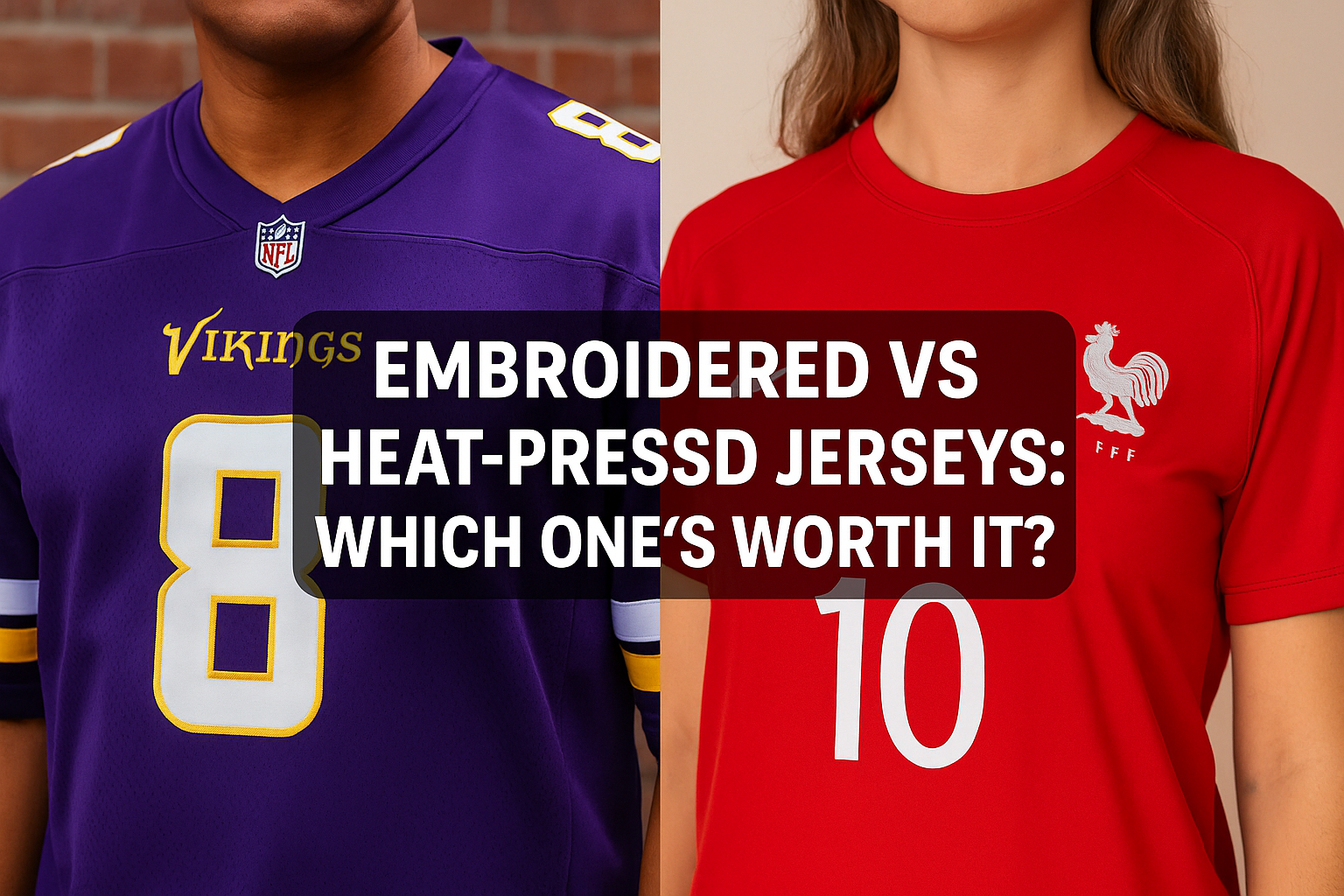
When I first started buying custom sports jerseys, I didn’t think twice about how the logos or numbers were applied. Embroidered, heat-pressed, screen printed — it all looked the same to me. Until it didn’t. After a few washes, my favorite jersey started cracking. Another one felt uncomfortably heavy during summer practice. That’s when I realized: jersey printing methods matter a lot.
So here’s everything I learned the hard way.
What’s the Difference Between Embroidery and Heat Pressing?
Before diving into pros and cons, here’s a quick overview:
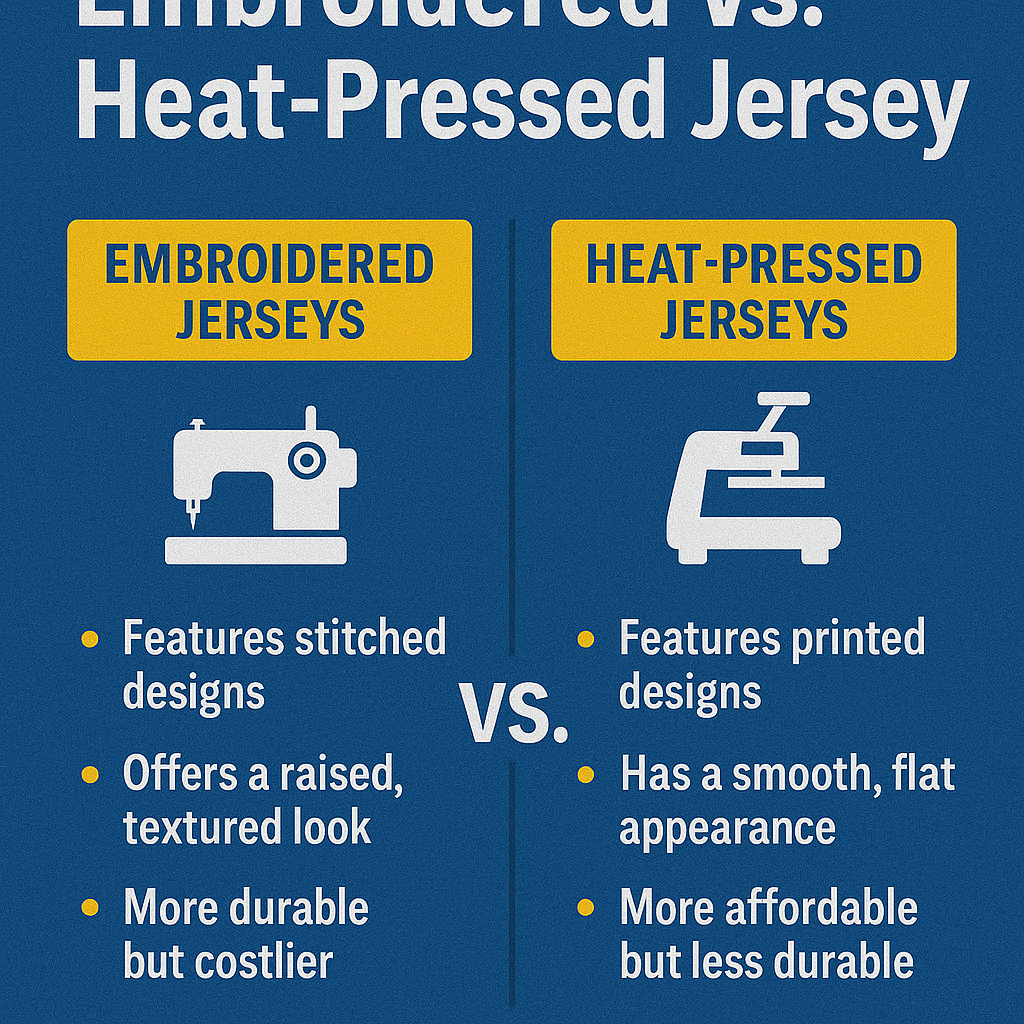
- Embroidered Jerseys: Threads are stitched directly into the fabric. Common for premium, professional-level jerseys.
- Heat-Pressed Jerseys: Vinyl or ink is applied using heat and pressure. Popular in fan gear and quick customizations.
Understanding this difference is key to making smarter purchases.
Pros and Cons: Embroidered vs Heat Pressed (From My Experience)
Embroidered Jerseys
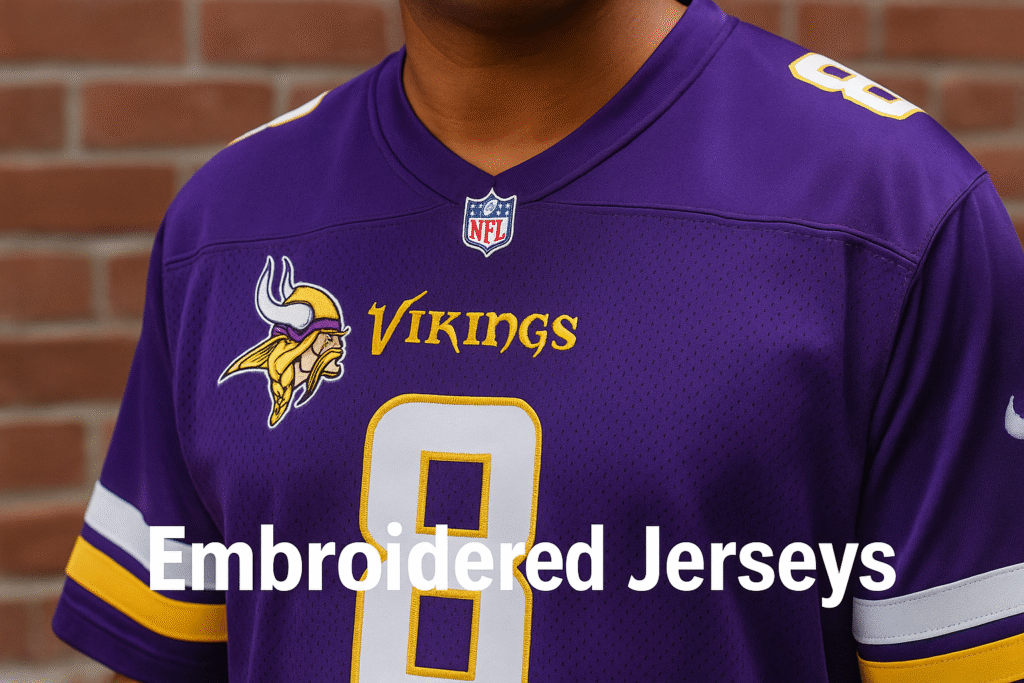
Pros:
- Durable and long-lasting
- Premium, authentic look
- Great for team branding and logos
Cons:
- Heavier (can feel bulky during sports)
- Higher cost
- Not ideal for very thin fabrics
Heat-Pressed Jerseys
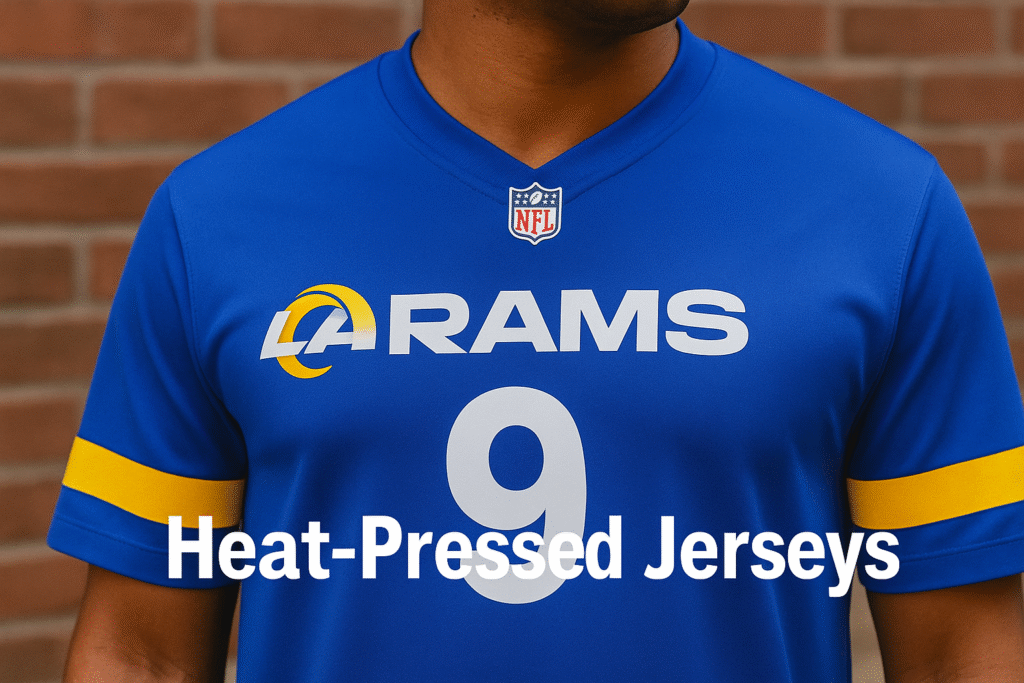
Pros:
- Lightweight and flexible
- Affordable for teams and fans
- Faster to produce (great for events)
Cons:
- Vinyl can peel over time
- Not as durable with frequent washing
- Susceptible to cracking
✅ Expert Opinion: According to textile print specialist, Kevin Mathews, “Embroidery offers unmatched durability, but heat pressing gives you speed and flexibility. It depends on the jersey’s use — performance or presentation.”
Personal Story: What I Learned the Hard Way
I bought a heat-pressed Kawhi Leonard Clippers Jersey (Check it out) because it was affordable and looked slick. After just five washes, the vinyl numbers started peeling. I was crushed.
Later, I upgraded to an embroidered Randy Moss Vikings Jersey (Shop here). The stitching held up beautifully — even after 20 washes. That taught me to match jersey customization techniques with how often and intensely you’ll wear it.
Jersey Printing Methods 101
There are several ways to apply names and logos to sportswear:
| Method | Description |
|---|---|
| Embroidery | Thread stitched directly into fabric |
| Heat Press | Vinyl or ink pressed with heat |
| Sublimation | Dye injected into the fabric (great for full prints) |
| Screen Printing | Ink applied using mesh screens |
Which Jersey Style Lasts Longer?
In most cases, embroidered jerseys last longer. They hold up to frequent washes and physical play. Heat-pressed jerseys are more fragile but are fine for casual wear or special occasions.
Fabric Compatibility with Embroidery
Thin, lightweight fabrics don’t always work well with embroidery. The stitching can pucker or feel rough against the skin. That’s why DIY jersey printing options usually recommend heat press or sublimation.
✅ For example, this lightweight Women’s France National Team Jersey (View here) is better suited for heat pressing due to its fine fabric.
Jersey Number Printing Methods
- Vinyl heat transfer: Quick, affordable, used in many youth leagues
- Tackle twill embroidery: Premium, sewn-on feel
- Sublimated print: Fused directly, won’t peel or fade
Each has its place — just don’t expect a $30 heat-pressed number to last like a stitched one.
Printed vs Stitched Jerseys: Which Feels Better?
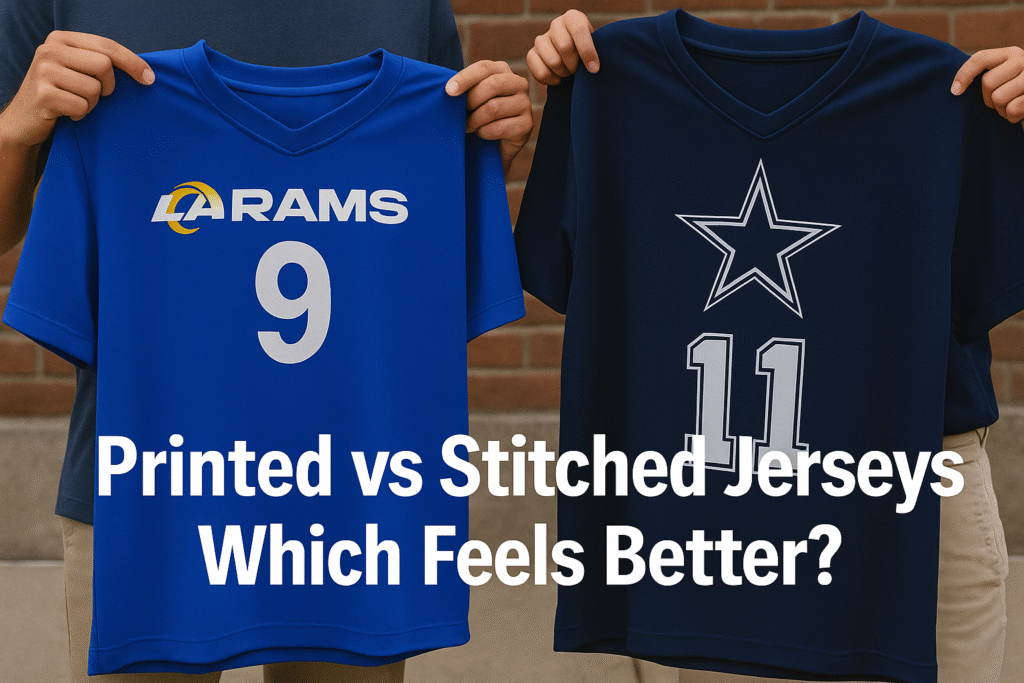
If you prioritize comfort, printed jerseys (heat-pressed or sublimated) feel softer and lighter. But stitched jerseys feel more durable and professional. Some people find embroidered jersey discomfort, especially when worn directly on the skin.
Common Heat-Pressed Jersey Problems
- Peeling heat press vinyl after washing
- Cracking jersey logos with repeated stretching
- Color fading due to cheap vinyl
➡️ Want something that holds up? Try this Women’s Blackhawks Embroidered Jersey (Shop now).
Custom Team Jersey Options at CJP Apparels
Whether you need affordable heat-pressed options for a little league team or premium embroidered jerseys for varsity players, CJP Apparels has it all.
- Anze Kopitar Kings Alternate Jersey – Authentic Pro
- Jamie Drysdale Ducks Home Jersey
- Ryan Getzlaf Ducks Women’s Breakaway Jersey
Explore more sportswear personalization tips at CJP Apparels.
How to Print on Sports Jerseys at Home
If you’re into DIY, here are steps for heat-press customization:
- Use polyester or poly-blend jerseys
- Buy heat-transfer vinyl and a household iron or heat press machine
- Cut your design using a vinyl cutter
- Apply with heat (305°F) and firm pressure
- Let it cool before peeling
⚠️ Warning: Don’t try embroidery on lightweight fabrics. It can stretch or damage the material.
Final Thoughts: My Honest Recommendation
- Go embroidered if you want longevity, a premium look, or play regularly.
- Choose heat-pressed for quick, budget-friendly, or event-based jerseys.
And always check fabric type and jersey logo application methods before buying.
FAQs: Your Questions Answered
Which lasts longer — embroidered or heat-pressed jerseys?
Embroidered jerseys generally last longer due to durable stitching, making them better for long-term or athletic use.
Is heat-pressed lettering going to peel off after a few washes?
If not applied correctly, yes. Poor vinyl or excessive washing can lead to peeling heat press vinyl.
Why are embroidered jerseys so much more expensive?
Embroidery involves more labor, higher-quality materials, and advanced machinery.
Do embroidered jerseys feel uncomfortable or heavy?
They can — especially if worn without a layer underneath. It’s a common concern with embroidered jersey discomfort.
Can I customize a jersey with heat-press at home?
Yes! Many DIY jersey printing options exist. Just use proper vinyl and follow heat press instructions.
Which is better for sports teams: embroidery or heat-press?
Depends on the budget and usage. Embroidery is better for durability; heat press for affordability.
What’s your experience with heat-pressed vs embroidered jerseys?
Personally, embroidered lasts longer, but heat press is great for casual or short-term use.
Can embroidery ruin lightweight jersey material?
Yes, it can distort or stress thin fabrics. Know your fabric compatibility with embroidery first.
Explore CJP Apparels’ Full Collection for Your Team or Fans:
- Boston Bruins Jerseys for Kids
- Houston Astros City Connect Replica Jersey
- Anze Kopitar Kings Women’s Home Jersey
Ready to upgrade your jersey game? Choose CJP Apparels — where comfort, performance, and style come together.


